Wealth or wisdom
The Lost Symbol“Wealth or wisdom” is the choice Peter Solomon presents to his firstborn son, Zachary, on his eighteenth birthday. The phrase gives a name to a family inheritance that is more than money: it sets immediate financial independence against the long education and custodial responsibility attached to the Masonic pyramid. Zachary’s refusal turns the choice into a painful confrontation between Peter’s sense of family duty and his son’s rejection of that legacy.
The Inheritance and Its Hidden Choice
Peter introduces the choice during a private meeting in his study, with Warren Bellamy present as a witness. Zachary has come to receive the share of the Solomon fortune traditionally offered to each child upon reaching adulthood. Peter explains that the money is intended as a seed for a productive and philanthropic life, and places a black portfolio containing the documents needed to transfer it into Zachary’s name on the desk.
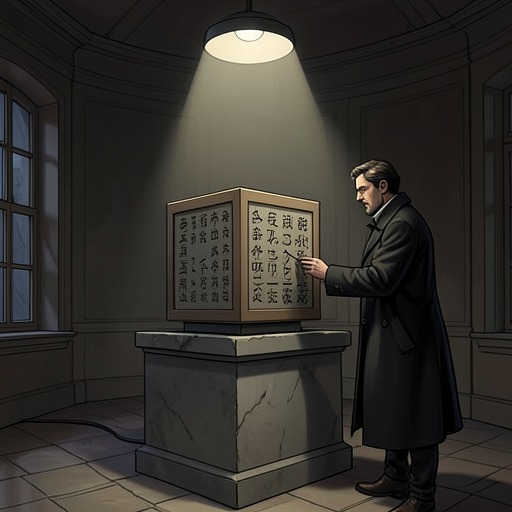
Before Zachary can take the portfolio, Peter explains that, as the firstborn, he is entitled to a further choice. Peter describes it as a choice “between wealth or wisdom.” The two terms are embodied in the objects before them: the portfolio represents the financial inheritance, while the heavy stone pyramid, carved with Masonic symbols, carries a different inheritance and responsibility.
What Wisdom Entails
Peter tells Zachary that the pyramid has been entrusted to the family for generations and serves as a map to one of humankind’s lost treasures, which he identifies as the Ancient Mysteries. He presents its protection not as possession of a valuable object but as stewardship of secrets that may eventually be deciphered, bringing about a moment of human transformation. For Peter, the pyramid’s promise depends on preparation: the education Zachary would receive through Freemasonry would help him understand what the decision entails.
The offer is not, as Zachary understands it, a simple exchange in which he permanently forfeits money for a stone. Peter says that if Zachary accepts the responsibility, he will keep both the money and the pyramid until Zachary has completed his Masonic education; only then would Zachary receive both. Peter’s arrangement makes wisdom a condition of readiness for wealth, and casts the family inheritance as an obligation to be approached with maturity. He warns that “wealth without wisdom can often end in disaster.”
Rejection and Significance
Zachary has no interest in joining the Masons or studying ancient mysteries. He treats the pyramid as an implausible distraction from what he regards as his birthright, takes the portfolio, and leaves the study despite Peter’s warning never to speak of the pyramid. The title’s balanced alternatives therefore do not describe an abstract debate alone: in this scene, they become a concrete decision about education, secrecy, inheritance, and trust.
Peter’s appeal is at once paternal and custodial. He fulfills what he sees as his family obligation by offering Zachary the choice, but cannot make his son value the knowledge the offer represents. Zachary’s departure leaves Peter uncertain that his son will keep the pyramid secret, while Bellamy’s presence underscores that the decision also concerns the protection of a guarded Masonic inheritance. The phrase’s force comes from that mismatch: Peter understands wisdom as a responsibility that can prepare a person to receive wealth, whereas Zachary sees the same arrangement as an attempt to withhold what is already his.